Fleet Maintenance: Benefits of an In-House Maintenance Facility for Transport Companies
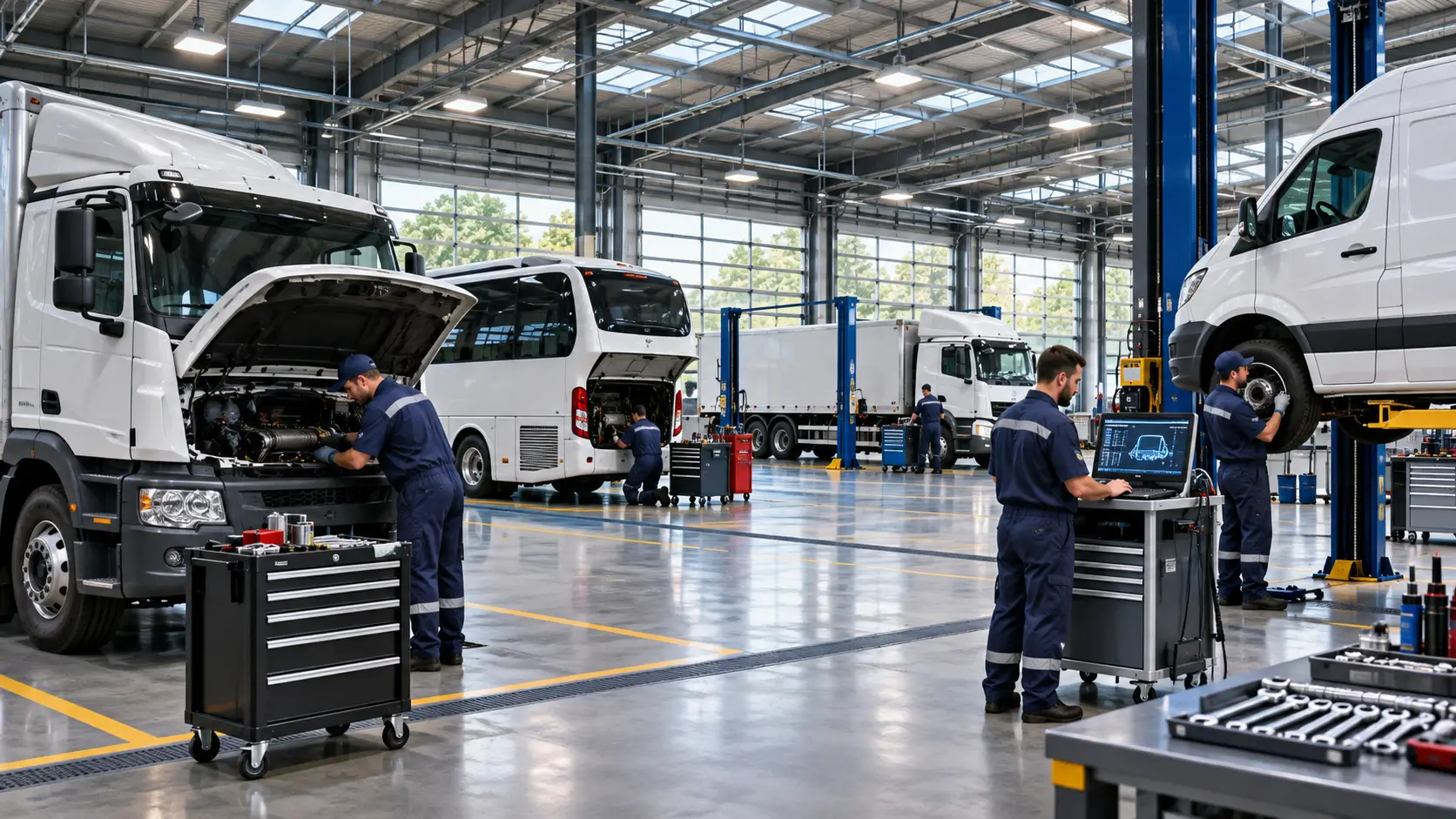
For transportation companies, vehicle reliability directly affects daily operations, customer satisfaction, and operating costs. A single vehicle breakdown can disrupt schedules, delay passengers, and create additional expenses. When several vehicles require unexpected repairs, the impact can extend across the entire business.
This is why effective Fleet Maintenance is essential for companies that depend on buses, cars, vans, and other commercial vehicles. A structured maintenance strategy helps identify mechanical problems early, maintain vehicle safety, and reduce unexpected downtime.
One approach worth considering is an in-house maintenance facility or a professional maintenance partner with dedicated servicing capabilities. For businesses operating in Egypt, working with an experienced transportation provider such as Alouf Transport can help simplify vehicle maintenance and support more organized fleet operations.
What Is Fleet Maintenance and Why Is It Important?
Fleet Maintenance refers to the planned inspection, servicing, repair, and monitoring of vehicles used by a business. It covers everything from routine oil changes and tire inspections to engine diagnostics, brake servicing, and major mechanical repairs.
The main objective is to keep vehicles safe, reliable, and available for their intended operations.
For transportation companies, maintenance is particularly important because vehicles often operate for extended periods, follow demanding schedules, and travel across different road conditions.
A comprehensive fleet maintenance program typically includes:
- Preventive maintenance: Routine servicing based on mileage, operating hours, or manufacturer recommendations.
- Corrective maintenance: Repairs performed after identifying mechanical problems or component failures.
- Vehicle inspections: Regular checks of brakes, tires, lights, fluids, suspension, and other essential components.
- Maintenance records: Documentation of repairs, inspections, replacement parts, and servicing dates.
- Performance monitoring: Reviewing vehicle condition and maintenance history to identify recurring problems.
Without a structured approach, companies may rely too heavily on emergency repairs, making vehicle availability and operating budgets harder to manage.
What Are the Benefits of an In-House Fleet Repair Shop?
An in-house maintenance facility gives transportation companies greater control over vehicle servicing. Instead of depending entirely on external repair workshops, businesses can access dedicated maintenance resources through their own facility or an established maintenance partner.
The following are some of the main advantages.
-
Faster Fleet Maintenance and Repair
Time is an important operational factor for transportation businesses. When a vehicle develops a mechanical problem, delays in diagnosis, repair authorization, or workshop scheduling can affect the entire transportation plan.
An accessible maintenance facility can simplify this process by making inspections and repairs easier to coordinate.
Dedicated maintenance arrangements can help businesses:
- Identify mechanical problems earlier.
- Coordinate routine servicing more efficiently.
- Reduce unnecessary transportation to external workshops.
- Organize repair priorities according to operational needs.
- Return serviced vehicles to operation when they are ready.
For companies managing employee transportation or scheduled passenger services, faster maintenance coordination can help reduce disruptions.
-
Better Control Over Maintenance Quality
Maintenance quality directly influences vehicle safety and long-term performance. An organized facility can provide clearer servicing procedures, maintenance records, and inspection standards.
Businesses should pay particular attention to the qualifications of technicians, the quality of replacement components, and compliance with vehicle manufacturers’ maintenance recommendations.
Using original manufacturer parts where appropriate can also help maintain compatibility with vehicle specifications.
Alouf Transport highlights its dedicated maintenance center, trained personnel, and use of original manufacturer parts as part of its maintenance offering.
-
Improved Vehicle Availability
Vehicle availability measures how much of a fleet is ready for operation when needed.
Frequent mechanical problems can reduce the number of available vehicles and force transportation managers to reorganize routes, schedules, or vehicle assignments.
Regular servicing helps identify issues before they develop into more serious failures. It also allows managers to plan maintenance around operational requirements rather than waiting for unexpected breakdowns.
For businesses operating large employee transportation fleets, maintaining sufficient vehicle availability is particularly important during peak periods and shift changes.
How Does Fleet Maintenance Management Improve Vehicle Reliability?
Effective fleet maintenance management involves more than repairing vehicles when something goes wrong. It requires a coordinated system for monitoring vehicle condition, organizing servicing activities, and maintaining accurate records.
A fleet manager should have access to information such as:
- Vehicle mileage and operating hours.
- Previous maintenance and repair history.
- Upcoming service requirements.
- Outstanding mechanical issues.
- Replacement parts and repair expenses.
- Vehicle inspection results.
These records help identify patterns that might otherwise go unnoticed.
For example, if a particular vehicle repeatedly experiences brake problems, reviewing its maintenance history can help determine whether the issue is related to component quality, operating conditions, or an underlying mechanical fault.
Fleet management also connects maintenance activities with driver management, fuel monitoring, scheduling, and operational reporting.
Alouf Transport offers fleet management solutions that include vehicle maintenance, driver supervision, fuel consumption monitoring, and operational support. This integrated approach can help businesses coordinate different aspects of transportation management through one service provider.
How Can In-House Fleet Maintenance Reduce Maintenance Costs?
Reducing maintenance costs does not necessarily mean spending less on every repair. It means managing vehicle expenses more effectively over the entire operating lifecycle.
Preventive servicing may require planned expenditure, but it can help reduce the likelihood of expensive emergency repairs and secondary mechanical damage.
An organized maintenance strategy can support cost control in several ways.
-
Early problem detection
Regular inspections help technicians identify worn components, fluid leaks, and other developing problems before they become more serious.
-
Better maintenance planning
Scheduling servicing in advance makes it easier to coordinate workshop time, replacement parts, and vehicle availability.
-
Reduced emergency repair expenses
Unexpected breakdowns can involve additional recovery, repair, and operational costs. Preventive maintenance helps reduce exposure to these situations.
-
Longer vehicle service life
Following manufacturer recommendations and addressing mechanical issues promptly can help protect major vehicle components.
-
Improved expense tracking
Recording maintenance costs by vehicle allows managers to identify expensive units, recurring repairs, and opportunities to improve fleet efficiency.
For businesses operating in Egypt, where transportation schedules and operating expenses must be carefully managed, transparent maintenance reporting can support better financial planning.
What Are the Best Fleet Maintenance Practices for Transport Companies?
A successful fleet maintenance strategy requires consistent procedures rather than occasional inspections.
Transport companies should establish a system that defines when vehicles need servicing, who is responsible for inspections, and how maintenance activities are documented.
-
Developing a Fleet Maintenance Plan
A fleet maintenance plan establishes the procedures and responsibilities involved in keeping vehicles operational.
It should consider:
- Fleet size and vehicle categories.
- Vehicle age and mileage.
- Manufacturer maintenance recommendations.
- Daily operating distances and conditions.
- Vehicle usage and passenger capacity.
- Available maintenance resources.
- Maintenance budgets and operational priorities.
A company operating buses for employee transportation, for example, may have different maintenance requirements from a business using passenger cars for executive transportation.
The plan should therefore reflect actual vehicle usage rather than applying identical maintenance intervals to every vehicle.
-
Creating a Fleet Maintenance Schedule
A fleet maintenance schedule organizes servicing activities according to mileage, operating hours, time intervals, and manufacturer recommendations.
A typical schedule may include:
- Daily or pre-trip inspections.
- Periodic tire pressure and condition checks.
- Scheduled oil and filter changes.
- Brake system inspections.
- Battery and electrical system checks.
- Cooling system inspections.
- Periodic comprehensive vehicle servicing.
The exact frequency depends on the vehicle type, manufacturer guidance, operating conditions, and maintenance history.
Scheduling repairs in advance also helps transportation managers avoid unnecessary conflicts between maintenance appointments and peak operating periods.
-
Using a Fleet Maintenance Checklist
A standardized fleet maintenance checklist helps drivers, technicians, and fleet managers follow consistent inspection procedures.
A basic checklist may cover:
- Tire pressure, tread condition, and visible damage.
- Brake performance and warning indicators.
- Headlights, indicators, and brake lights.
- Engine oil and other essential fluid levels.
- Battery condition.
- Windshield, mirrors, and wipers.
- Steering and suspension condition.
- Seat belts and passenger safety equipment.
- Unusual engine noises or fluid leaks.
Drivers should report any unusual vehicle behavior immediately. More detailed mechanical inspections should be performed by qualified technicians.
Maintaining completed checklists also creates a useful record for future maintenance decisions.
How Does Fleet Maintenance Help Reduce Fleet Downtime?
Fleet downtime refers to the period when a vehicle is unavailable for its intended operation because of maintenance, repairs, or mechanical failure.
For transportation companies, downtime can affect more than the vehicle itself. It may disrupt employee transportation, delay scheduled trips, increase pressure on other vehicles, and create additional operational expenses.
A proactive maintenance program helps reduce avoidable downtime by identifying developing problems and scheduling repairs before they become urgent.
Businesses can further improve vehicle availability by:
- Monitoring maintenance requirements continuously.
- Prioritizing safety-related repairs.
- Keeping accurate vehicle service records.
- Coordinating maintenance with transportation schedules.
- Reviewing recurring mechanical problems.
- Maintaining clear communication between drivers, technicians, and operations teams.
Choosing a maintenance provider with an accessible facility and organized service procedures can also make it easier to coordinate repairs.
For organizations that do not want to manage every maintenance activity internally, outsourcing fleet maintenance to a specialized transportation company may provide a practical alternative.
FAQ
-
What is the difference between in-house and outsourced fleet maintenance?
In-house fleet maintenance is managed through a company’s own maintenance facility and technical team. Outsourced fleet maintenance involves hiring an external provider to handle servicing and repairs. The best option depends on fleet size, operating requirements, available resources, and maintenance costs.
-
When should a transport company establish an in-house maintenance facility?
A transport company should consider an in-house facility when its fleet size, maintenance frequency, operating schedules, and repair requirements justify the investment. Businesses should compare facility costs, staffing, equipment, spare parts, and operational requirements before making a decision.
-
Which fleet maintenance tasks should be handled in-house versus outsourced?
Routine inspections, fluid checks, basic servicing, and minor repairs may be handled internally when suitable equipment and qualified technicians are available. Specialized engine repairs, advanced diagnostics, and complex electrical or transmission problems may require external specialists.