

Bus Seating Capacity: How to Choose the Right Bus Size for Group Transportation
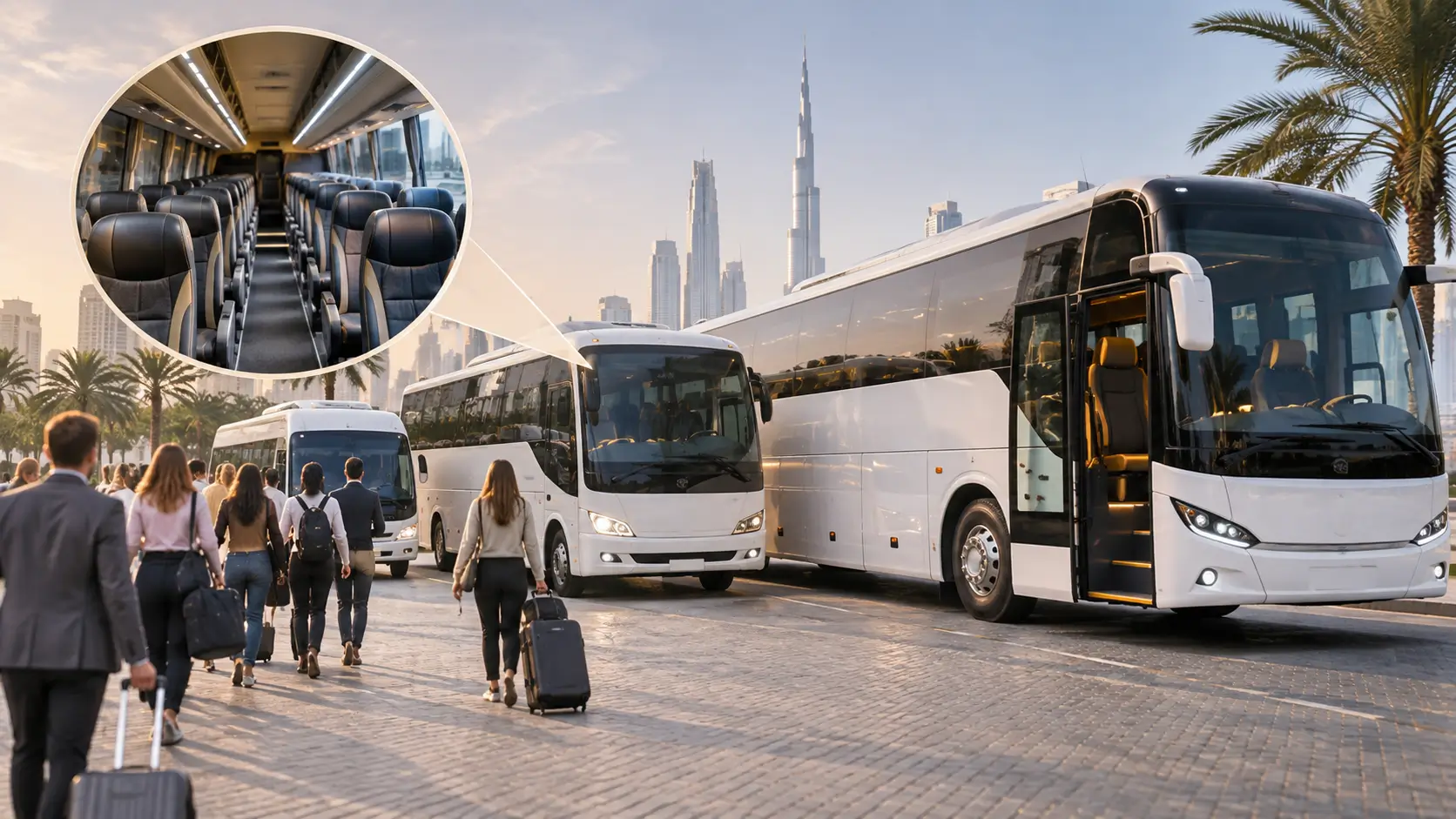
Choosing the right vehicle for group transportation starts with understanding Bus Seating Capacity. Whether a company needs daily employee transportation or a tourism operator is organizing a group trip, selecting the appropriate bus can improve passenger comfort, simplify scheduling, and help control transportation costs.
Different vehicles accommodate different passenger numbers, and their seating arrangements vary according to size, design, and purpose. Businesses planning transportation in Egypt should consider these differences before selecting a provider.
Alouf Transport offers various passenger transportation solutions, including minibuses and full-size coaches, helping businesses and organizations find suitable vehicles for their transportation requirements.
What Is Bus Seating Capacity and Why Does It Matter?
Bus Seating Capacity refers to the maximum number of passengers a bus is designed and legally approved to accommodate. It generally excludes the driver, although customers should confirm the exact specifications of each vehicle.
Understanding passenger capacity helps businesses select the appropriate vehicle for their workforce, corporate events, and group travel requirements.
Choosing the correct bus size offers several advantages:
- Better passenger comfort: Everyone has an appropriate seat without exceeding the approved capacity.
- Efficient transportation planning: Businesses can organize routes and pickup schedules more effectively.
- Cost management: Selecting a suitable vehicle helps avoid unnecessary transportation expenses.
- Improved organization: Companies can coordinate employee transportation according to workforce numbers and operating schedules.
For businesses, the objective is to select a vehicle that accommodates passengers comfortably while meeting operational requirements.
How Many Seats Are in a Bus?
The number of seats depends on the vehicle’s category, manufacturer, model, and interior configuration.
Generally, small passenger vans accommodate around 8–14 passengers, minibuses can carry approximately 15–25 passengers, and full-size coaches may accommodate 40–55 passengers.
These figures are indicative rather than universal standards. Actual Bus Seating Capacity should always be confirmed against the vehicle’s approved specifications.
Alouf Transport offers several options, including Toyota Hiace vehicles accommodating approximately 10–14 passengers, Toyota Coaster minibuses with seating for 20–21 passengers, and a Mercedes-Benz coach with a capacity of 49 passengers.
These options give businesses flexibility when arranging employee transportation, corporate trips, and group transfers.
What Are the Different Types of Buses and Their Seating Capacities?
Selecting the right vehicle requires understanding how different bus categories serve different transportation needs.
-
Minibus Seating Capacity
Minibuses are suitable for small and medium-sized groups. Their compact design makes them practical for employee commuting, airport transfers, and organized excursions.
Depending on the model, minibus seating capacity generally ranges from 10 to 25 passengers.
Alouf Transport offers Toyota Hiace vehicles for smaller groups and Toyota Coaster minibuses for larger passenger requirements.
These vehicles can be particularly useful for companies transporting employees between residential areas and workplaces without requiring a full-size coach.
-
Coach Bus Seating Capacity
Coach buses are designed for larger groups and longer journeys. Their passenger capacity typically ranges from 40 to 55 seats, depending on the model.
They are commonly used for corporate transportation, tourism, conferences, and intercity travel.
Alouf Transport offers a Mercedes-Benz 49-seater coach equipped with air conditioning, screens, and a microphone.
For organizations transporting larger groups, a coach can provide a practical solution by accommodating many passengers in one vehicle.
-
Charter Bus Seating Capacity
Charter buses are hired for specific transportation requirements, including corporate events, conferences, employee activities, and group transfers.
Their seating capacity depends on the selected vehicle, which can range from a minibus to a full-size coach.
When arranging charter transportation, customers should consider passenger numbers, pickup locations, luggage requirements, and journey duration.
-
Tour Bus Seating Capacity
Tour buses accommodate groups traveling for sightseeing, excursions, airport transfers, and organized trips.
Their capacity varies according to the vehicle type. Smaller groups may require minibuses, while larger tourism groups may benefit from full-size coaches.
Beyond Bus Seating Capacity, tourism operators should consider air conditioning, luggage storage, seat comfort, and travel distance.
Alouf Transport provides touristic transportation services for short- and long-distance journeys across Egypt.
How Does Bus Seating Arrangement Vary by Bus Type?
The total number of seats does not tell the whole story. Two buses with similar capacities may offer different levels of passenger comfort because of their interior layouts.
-
Bus Seating Layout and Seat Configuration
Common bus seating arrangements include:
- 2+2 configuration: Two seats on each side of a central aisle, commonly found in passenger coaches.
- 2+1 configuration: Two seats on one side and one on the other, providing additional individual space.
- Flexible configurations: Some vehicles offer adjustable seating arrangements depending on their design.
The configuration affects available legroom, aisle space, and the total number of passenger seats.
Businesses should compare both seating capacity and interior layout when selecting a transportation vehicle.
-
Passenger Comfort and Legroom
Passenger comfort is particularly important for daily commuting and long-distance travel.
Factors such as seat dimensions, legroom, air conditioning, ventilation, and interior space influence the overall experience.
Companies arranging employee transportation should consider these details because employees may spend considerable time commuting.
Choosing a suitable vehicle helps businesses balance passenger capacity with comfort.
How Does Bus Seating Capacity Affect Group Transportation?
Bus seating capacity directly affects how transportation operations are organized.
For companies with large workforces, the number of seats available determines how many employees can travel in each vehicle. It also influences the number of vehicles needed, route planning, pickup schedules, and operational costs.
For example, a company transporting 45 employees may consider a coach with sufficient approved passenger capacity instead of arranging several smaller vehicles.
However, passenger numbers are only one part of the decision. Employees may work different shifts or live in different locations, making multiple routes or departure times necessary.
The same principle applies to schools, hotels, hospitals, and travel agencies.
A transportation provider should understand the group’s operational requirements before recommending a vehicle. Alouf Transport serves different sectors, including corporate, industrial, educational, medical, hospitality, commercial, and touristic transportation.
This variety of applications makes it important to consider both vehicle capacity and the specific needs of each customer.
How to Choose the Right Bus Size for Your Group?
Selecting the right bus involves more than calculating the number of passengers. Organizations should evaluate their transportation schedules, routes, luggage requirements, and journey duration.
-
Choosing a Bus Based on Group Size
Passenger numbers are the starting point when comparing vehicle options.
- Small groups: Toyota Hiace vehicles can accommodate approximately 10–14 passengers.
- Medium-sized groups: Toyota Coaster minibuses provide seating for approximately 20–21 passengers.
- Large groups: A 49-seat Mercedes-Benz coach can accommodate larger employee groups and organized trips.
For businesses, transportation requirements may also change according to working shifts, employee locations, and pickup schedules.
Alouf Transport provides employee transportation solutions that can be arranged around business schedules and route requirements.
-
Luggage Space and Trip Duration
Luggage requirements can influence the choice of vehicle, particularly for airport transfers and tourism.
A group traveling with suitcases may require more storage space than employees commuting to an office.
Journey duration is another important consideration. Long-distance transportation requires attention to seating comfort, air conditioning, and available passenger space.
Before selecting a vehicle, customers should communicate the number of passengers, luggage requirements, destinations, and expected travel time.
FAQ
-
Does bus seating capacity include the driver?
No. Bus seating capacity generally refers to the number of passengers the vehicle can carry, excluding the driver. For example, Alouf Transport lists its Mercedes-Benz 49-seater coach as accommodating 49 passengers plus a driver.
-
Can luggage space affect the seating capacity of a bus?
Yes. Luggage requirements can influence vehicle selection because passengers need sufficient storage space for their belongings. A bus may have enough seats for everyone but insufficient luggage capacity. Customers should discuss suitcase quantities and sizes before booking.
-
Does wheelchair accessibility reduce bus seating capacity?
It can. Wheelchair-accessible vehicles may require dedicated spaces, ramps, lifts, and additional maneuvering room. These features can affect the number of conventional passenger seats available. Customers should confirm accessibility requirements and the vehicle’s approved configuration with the transportation provider.
